The Problem with Traditional Bench Power Supplies
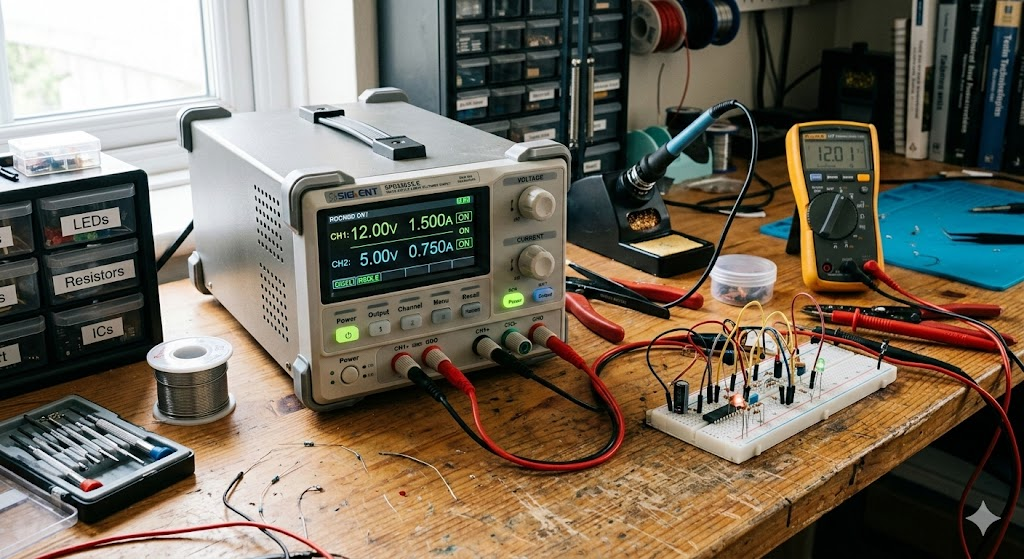
If you’ve ever prototyped electronics, you know the ritual. You sit down at your bench, surrounded by a tangle of cables, a chunky linear power supply humming in the corner, and you start working. The bench is sacred ground. It’s where things happen. But what if I told you the bench is now optional?
Traditional lab power supplies are fantastic tools – heavy, reliable, precise. But they’re also chained to the wall socket. They weigh kilograms. They take up half your desk. And they absolutely, categorically refuse to come with you to a client site, a hackerspace meetup, a field deployment, or a park bench on a sunny afternoon when you just want to test that new sensor board.
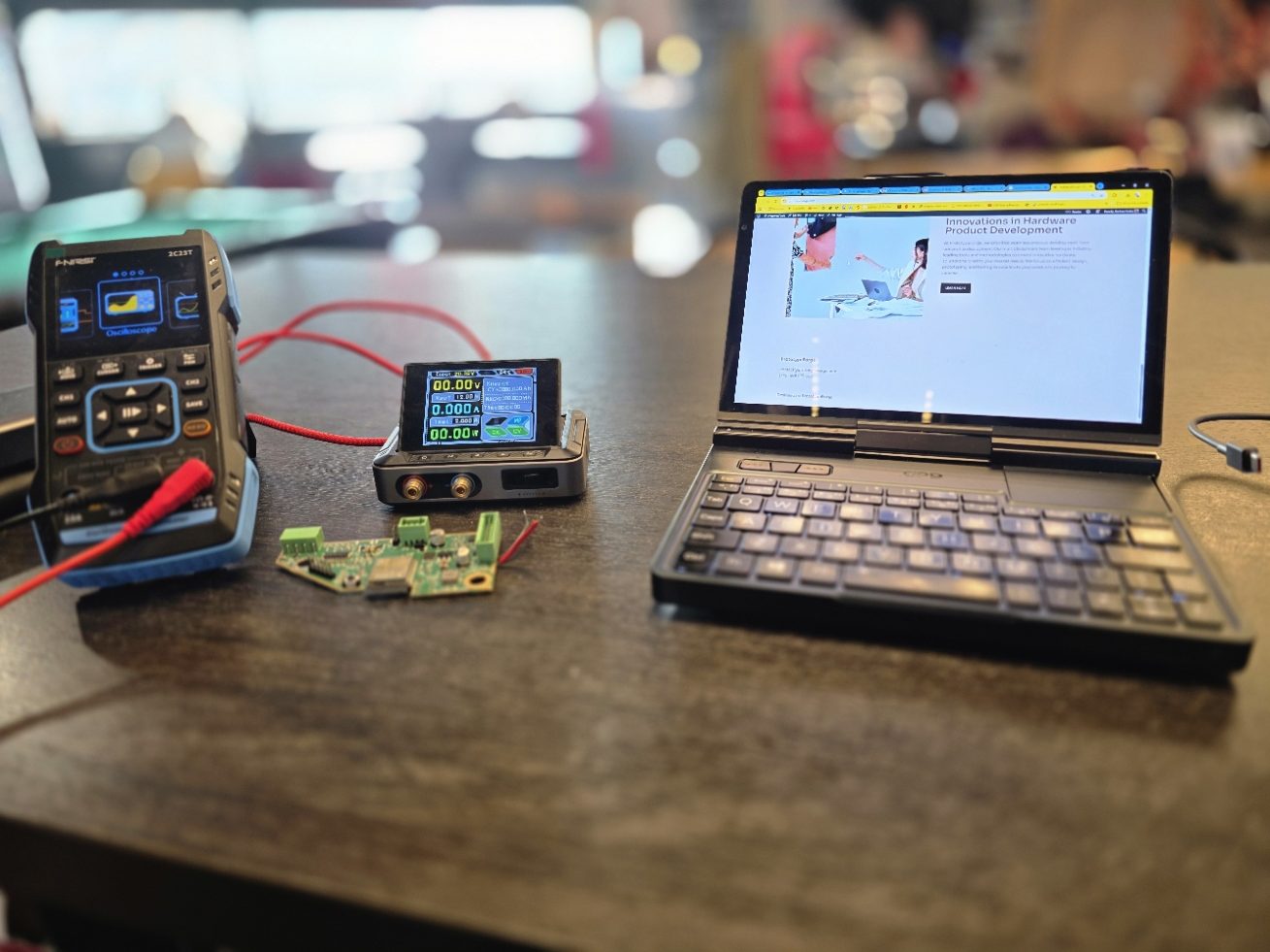
As someone who works across embedded systems, IoT development, energy management, and hardware prototyping — and who has written extensively about portable power solutions for extreme scenarios — I’ve been waiting for a device that would break this limitation. The FNIRSI DPS-150 is exactly that device.
What Exactly Is the FNIRSI DPS-150?
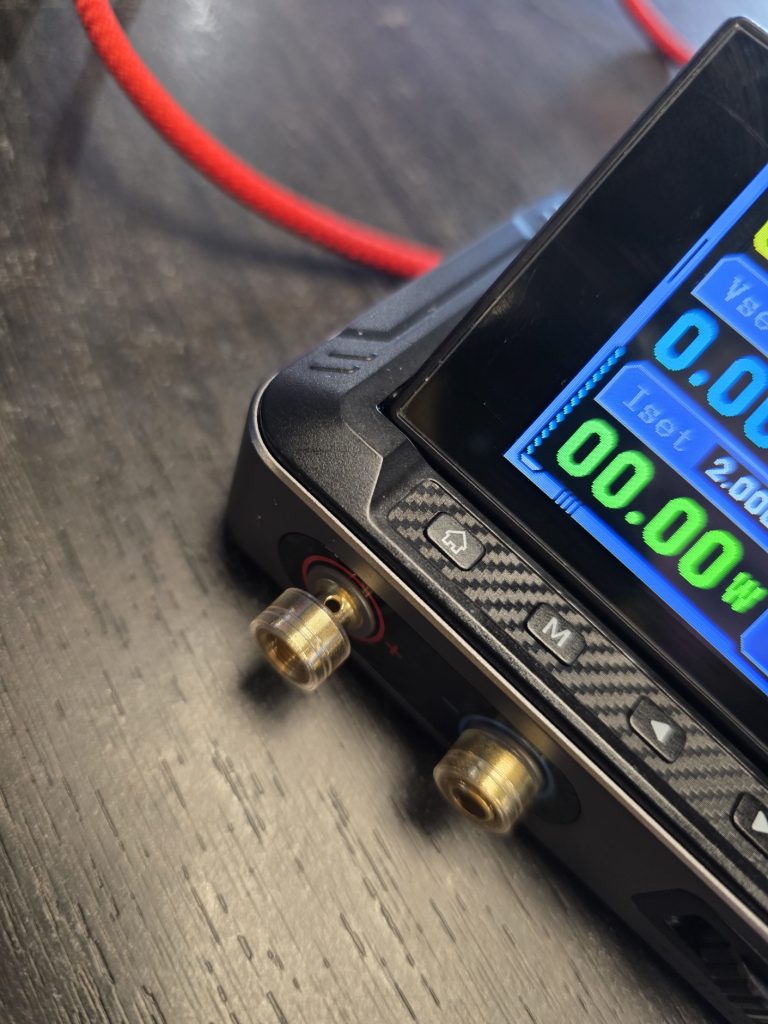
The DPS-150 is a miniature, programmable DC power supply that fits in the palm of your hand. It’s not a toy. It outputs 0–30V at 0–5A, delivering up to 150W of regulated power with 10mV/1mA resolution and less than 20mV of ripple. It supports both Constant Voltage (CV) and Constant Current (CC) modes. It has 8 built-in safety protections. And here’s the kicker, it runs from a USB-C Power Delivery input – awsome!
Read that again. A full-featured, adjustable, programmable lab power supply that you can power from a USB-C PD power bank.
Key Specifications
| Parameter | Value |
|---|---|
| Output Voltage | 0–30V (adjustable) |
| Output Current | 0–5A (adjustable) |
| Maximum Power | 150W |
| Voltage Resolution | 10mV (0.01V) |
| Current Resolution | 1mA (0.001A) |
| Output Ripple | < 20mV |
| Input Voltage Range | DC 5.0V–32V |
| Input Interfaces | USB-C (PD/QC), DC 5.5×2.5mm barrel |
| Display | 2.8″ IPS, 320×240, 90° flip |
| Modes | CV/CC, 6 presets, PC programmable |
| Output Connectors | 4mm banana, U-terminal, copper wire |
| Safety | OVP, OCP, OPP, UVP, SCP, OTP, reverse connection, reverse injection |
| Efficiency | 96.3% at full load |
| PC Software | Free (Windows), Micro USB connection |
| Price | ~$70 (unit only) / ~$100 (with 100W PD GaN adapter) |
Why This Changes Everything for Prototyping
USB-C PD: The Universal Power Bus
The real genius of the DPS-150 is the input side, not the output. By accepting USB-C Power Delivery as an input source, this device taps into an ecosystem that’s already everywhere. Your laptop charger? That’s a PD source. Your 100W GaN charger? PD source. That 20,000mAh power bank sitting in your bag? PD source.
With a decent PD power bank (65W–100W class), you get a completely portable, grid-independent power supply capable of driving most prototyping scenarios. We’re talking about powering ESP32 boards, Raspberry Pi clusters, sensor arrays, motor drivers, LED strips, charging circuits — basically anything you’d normally need a bench supply for.
There is a caveat worth noting: the DPS-150 currently doesn’t support PD 3.1, so the maximum PD input voltage tops out at 20V. To reach the full 30V output range, you’d need a DC barrel jack input (up to 32V). But for the vast majority of prototyping work — microcontrollers, sensors, communication modules, small actuators — the 20V PD ceiling is more than enough.
Precision Where It Counts
At 10mV voltage resolution and 1mA current resolution, this isn’t some rough approximation of a power supply. You can set 3.30V for your microcontroller rail, 1.80V for your flash memory, 12.00V for your motor driver, or 5.00V for your sensor bus — and know exactly what’s happening. The sub-20mV ripple means sensitive analog circuits won’t complain. The CC mode lets you safely charge batteries or test current-limited scenarios without risking your hardware.
Compare this to what many of us used to do: cut a USB cable, solder wires to a buck converter from AliExpress, twist a tiny potentiometer with a screwdriver, and hope the multimeter agrees. The DPS-150 replaces that entire hacky workflow with a proper, repeatable instrument.
Six Presets and PC Programmability
The device lets you store 6 preset voltage/current configurations for instant recall. If your daily workflow involves switching between 3.3V for an ESP32, 5V for a sensor bus, and 12V for a motor driver, you don’t need to dial in each value manually every time — you just tap a preset.
The 2.8-Inch IPS Display
The display is a 320×240 IPS panel that shows voltage, current, power, accumulated Wh and Ah, elapsed time, and device temperature. It supports a 90° flip, meaning you can stand the unit upright or lay it flat and still read everything clearly. There’s both a numerical view and a real-time curve display for monitoring output over time. For a pocket-sized device, the information density is impressive.
Versatile Output Connections
The output side offers 4mm banana plug sockets, U-shaped screw terminals, and bare copper wire connectors. This means you can use standard lab cables, screw in permanent wiring for a project, or just jam in some bare wires for a quick test. It’s the kind of flexibility that shows the designers actually use this thing, not just spec it.
Real-World Scenarios: Where This Shines
IoT Field Deployment. You’re installing a sensor node on a remote site. The firmware is acting up. You need to power the board at exactly 3.3V, monitor current draw, and maybe simulate a brownout condition to test your watchdog. With a DPS-150 and a power bank, you do this on-site, standing in a field, without hauling a bench supply and a extension cords.
Maker Meetups and Hackerspaces. Show up with your DPS-150, a power bank, some alligator clips, and a breadboard. You have a complete prototyping station that fits in a messenger bag. No fighting over the shared bench supply. No extension cords. Just sit down and build.
Client Demos and On-Site Debugging. When you’re doing hardware product development — integrating software, hardware, AI agents, and energy management systems — you often need to demo or debug at a client’s office. Carrying a full bench supply is impractical. The DPS-150 lets you bring professional-grade power supply capability in your laptop bag.
The Philosophy: No Limits on Working Environment
This is the point I really want to drive home. For decades, electronics prototyping has been a location-dependent activity. You needed the bench. You needed the wall socket. You needed the equipment that was too heavy and too fragile to move.
The FNIRSI DPS-150, powered by a USB-C PD power bank, shatters that assumption. It’s a paradigm shift in the same way that laptops freed software developers from their desks. Now hardware developers get the same freedom.
Think about it pragmatically. The device costs around $70. A decent 100W PD power bank is another $40–60. For roughly $120–130, you have a portable, programmable, precise DC power supply that works literally anywhere on the planet. In a café in Kraków. On a construction site in Norway. In a shipping container being converted into an IoT hub. In your car. On a train.
There is no limit for working environment anymore.
Honest Notes: What to Keep in Mind
- PD 3.1 not supported: Maximum PD input is 20V, which limits the output to 20V when running on USB-C alone. Need 24V or 30V? Use the DC barrel jack input with an appropriate adapter.
- It’s a switching supply: The sub-20mV ripple is excellent for most digital and mixed-signal work, but if you’re doing ultra-sensitive analog design, a linear supply still has the edge on noise floor.
- Don’t dual-source: FNIRSI explicitly warns not to connect power to both input ports simultaneously. This could damage the lower-voltage source. Didn’t checked that obviously 😀
- Battery charging needs care: If you’re using it to charge batteries, add a reverse current protection module (Schottky diode) to the output. The DPS-150 is not a dedicated charger.
- PC software is Windows-only: The companion application runs on Windows. Linux and macOS users will need to rely on the hardware controls which, to be fair, are fine.
Conclusion: The Best $70 You’ll Spend on Your Lab
The FNIRSI DPS-150 is not going to replace your big bench supply for high-power, all-day testing. That’s not what it’s for. What it does is something that no traditional supply can: it goes with you. Everywhere. It turns any USB-C PD source into a variable, regulated, protected, programmable DC power supply with professional-grade precision.
For hardware prototyping, IoT development, field work, education, repair, and even just having a reliable power source on your desk without the bulk — it’s hard to find a better value proposition in test equipment right now.
I keep mine in my everyday bag. It weighs nothing. It costs nothing to run. And it means I can prototype, test, debug, and build anywhere I want. That’s not an incremental improvement — it’s a fundamental change in how we can work.
The workbench is dead. Long live the workbench — in your backpack.